LOOK
Low, small, three-coloured
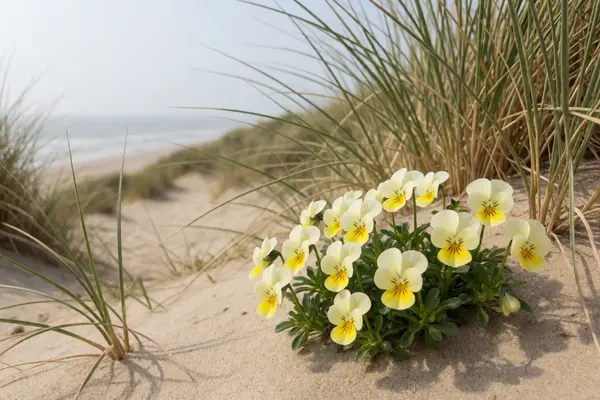
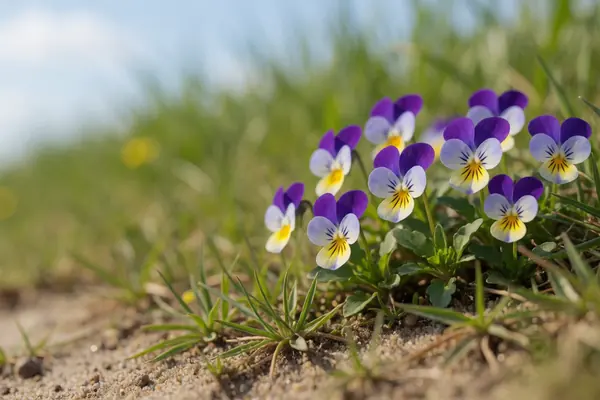
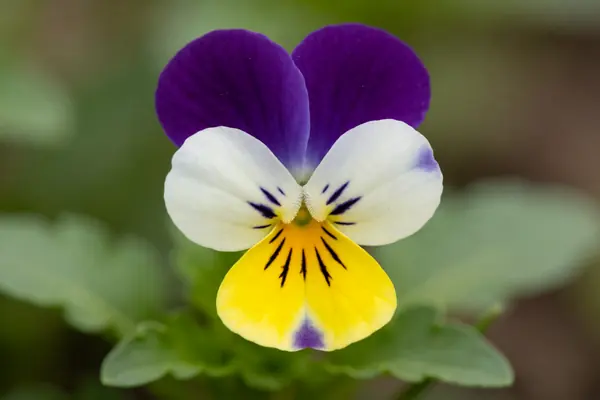
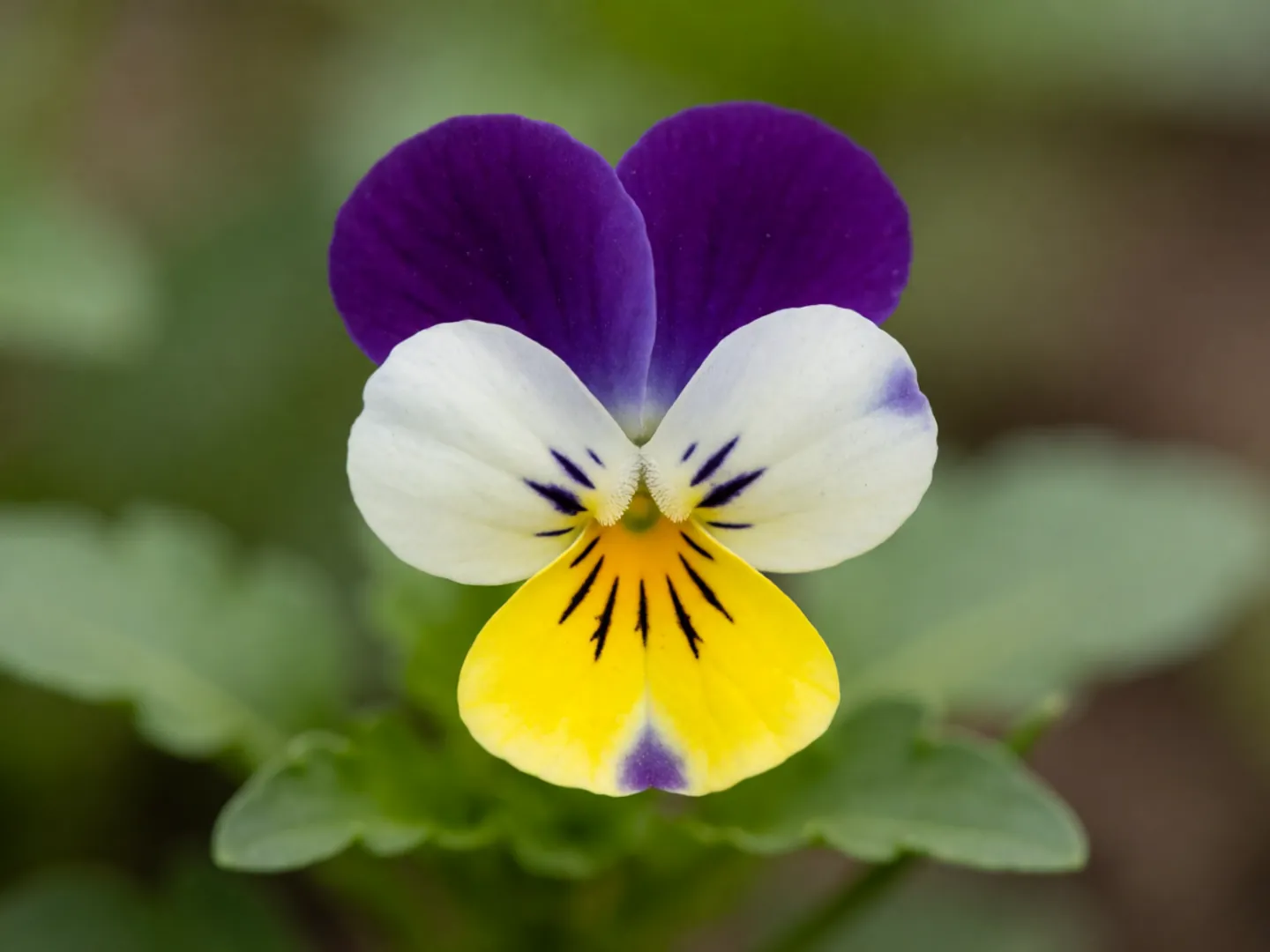
At most about 15 cm tall, with flowers around 1.5 cm across in purple, blue, yellow or white, often two-tone.
Which pansy? doodlejohnny
A WILDFLOWER WITH MANY NAMES
Johnny-jump-up is one name for a tiny purple, yellow and white flower.
Which pansy?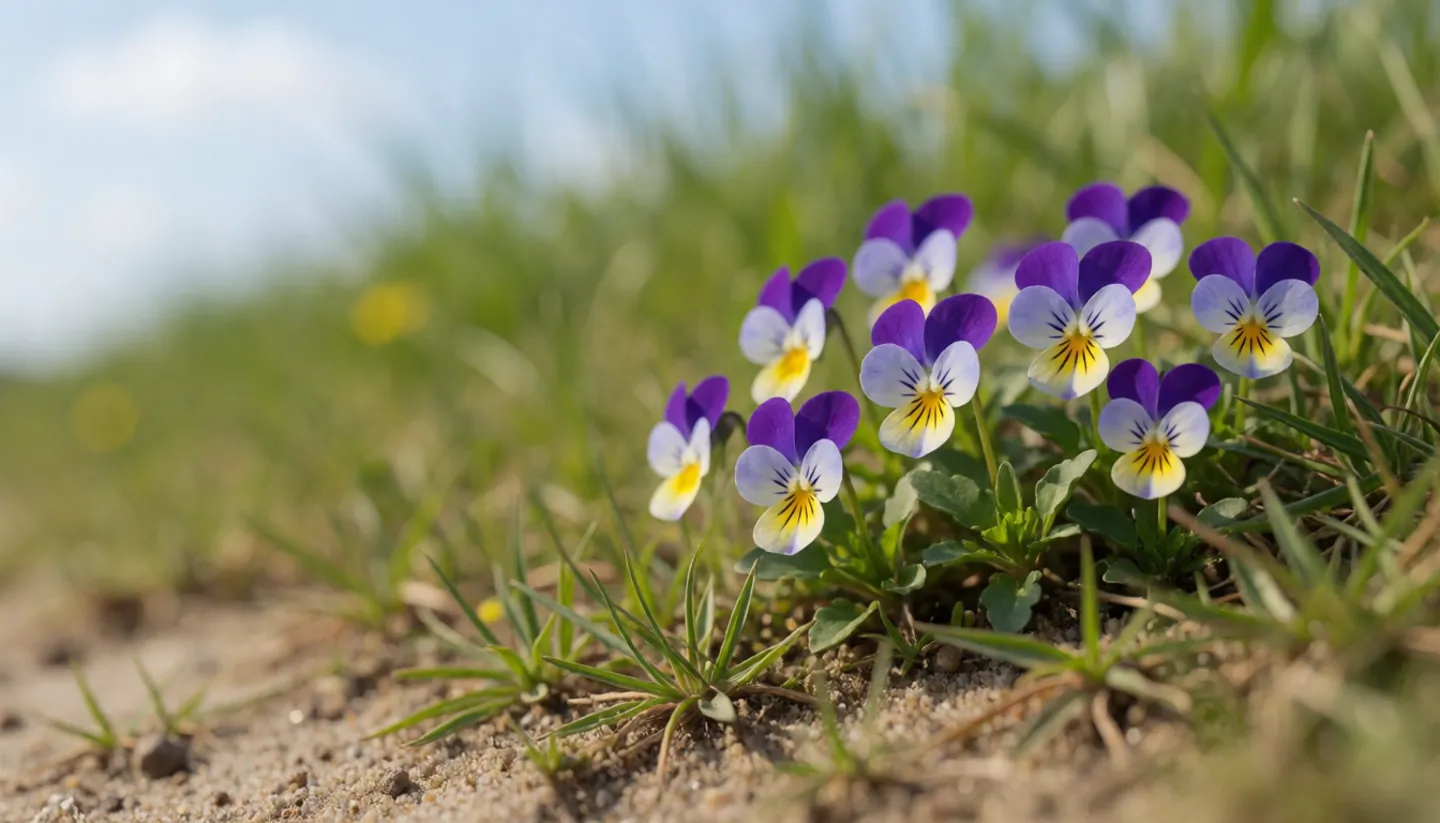
APR–SEPflowering months
The wild pansy, Viola tricolor, grows on sandy fields and dunes and is the ancestor of the garden pansy. This independent guide covers how to recognise it, where to look and the stories in its names.
Updated
THE SHORT ANSWER
Before garden pansies were bred,
'pansy' meant this wild plant.
LOOK
At most about 15 cm tall, with flowers around 1.5 cm across in purple, blue, yellow or white, often two-tone.
Which pansy?WHERE
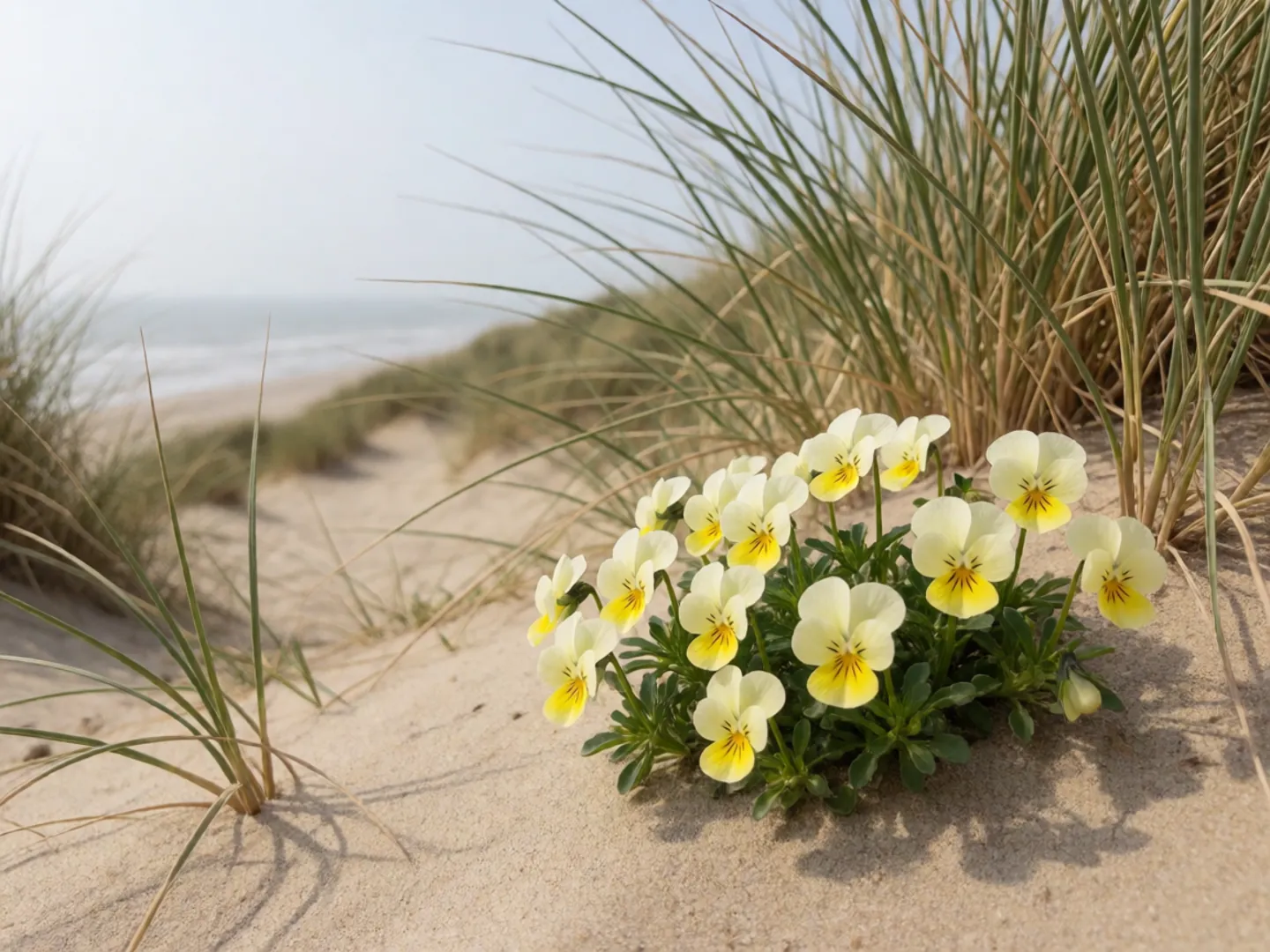
In Britain one form is an annual of light, sandy fields; another, the sand or dune pansy, is perennial on northern and western coasts.
The two formsNAMES
Johnny-jump-up, heartsease, love-in-idleness, three faces in a hood and pink of my john are all names for the same plant.
The namesWHICH PANSY?
Pick a plant to see how it relates to the wild pansy. The bar shows how wild it is, from field and dune to flower bed.
Based on Wild Flower Finder's notes on the British subspecies and reference descriptions of Viola tricolor. For identification interest only.
TWO NUMBERS WORTH KNOWING
One measurement to help you spot it,
one figure for its seed.
15 cm
Greatest height of the plant
Viola tricolor creeps and scrambles, reaching at most about 15 cm, with flowers around 1.5 cm across. It flowers from April to September in the northern hemisphere.
SIZE
≤ 50
Seeds produced at a time
It can produce up to 50 seeds at a time. The flowers are self-fertile and pollinated by bees.
SEED
Its folk names include wild pansy, Johnny-jump-up, heartsease, heart's delight, tickle-my-fancy, Jack-jump-up-and-kiss-me, come-and-cuddle-me, three faces in a hood, love-in-idleness and pink of my john.
FOUR WAYS TO SPOT IT
The wild pansy is easy to overlook because it is so small. These clues come from the descriptions behind this page.
Look on light, sandy fields, open grassland and wasteland, and on coastal dunes in the north and west.
That is its flowering season; Wild Flower Finder's dune photos from Cumbria were taken on 31 May and 1 June.
Unlike some violets it has no rosette of leaves at the base; leaves alternate up the stem, with well-developed lobed stipules.
This page covers identification and folklore only, not herbal use. Photograph the flower rather than picking it.
IN SHAKESPEARE
'Pansy' comes from the French pensée, 'thought'. In Hamlet, Ophelia says: 'And there is pansies, that's for thoughts.' The pansy Shakespeare knew was the wild one, long before garden pansies.
In A Midsummer Night's Dream, Oberon tells of Cupid's arrow falling on 'a little western flower, before milk-white, now purple with love's wound, and maidens call it love-in-idleness': probably the wild pansy.
Questions
Usually. Johnny-jump-up is one of many folk names for Viola tricolor, though the name is also applied to some similar species.
Wild Flower Finder describes one form as an annual arable weed of light, sandy soils and another, the sand pansy, as a perennial common on dunes and grassland on the north and west coasts.
Yes. Viola tricolor is the ancestor of the cultivated pansy. It has been bred in Britain since 1810 and cultivated pansies came on to the market in 1839.
It is an old folk name, one of many. The flower's link with thoughts and love runs through Shakespeare, from Ophelia's 'pansies, that's for thoughts' to love-in-idleness.
From April to September in the northern hemisphere. Flowers can be purple, blue, yellow or white, and are often two-toned.
ABOUT THIS NAME
doodlejohnny.com is part of the DoodleSale portfolio. It isn't in an auction right now, but you can ask about leasing it.